[ Article ]
What Punching 1,000 Holes in Steel Taught Me About Effective Digital Teams
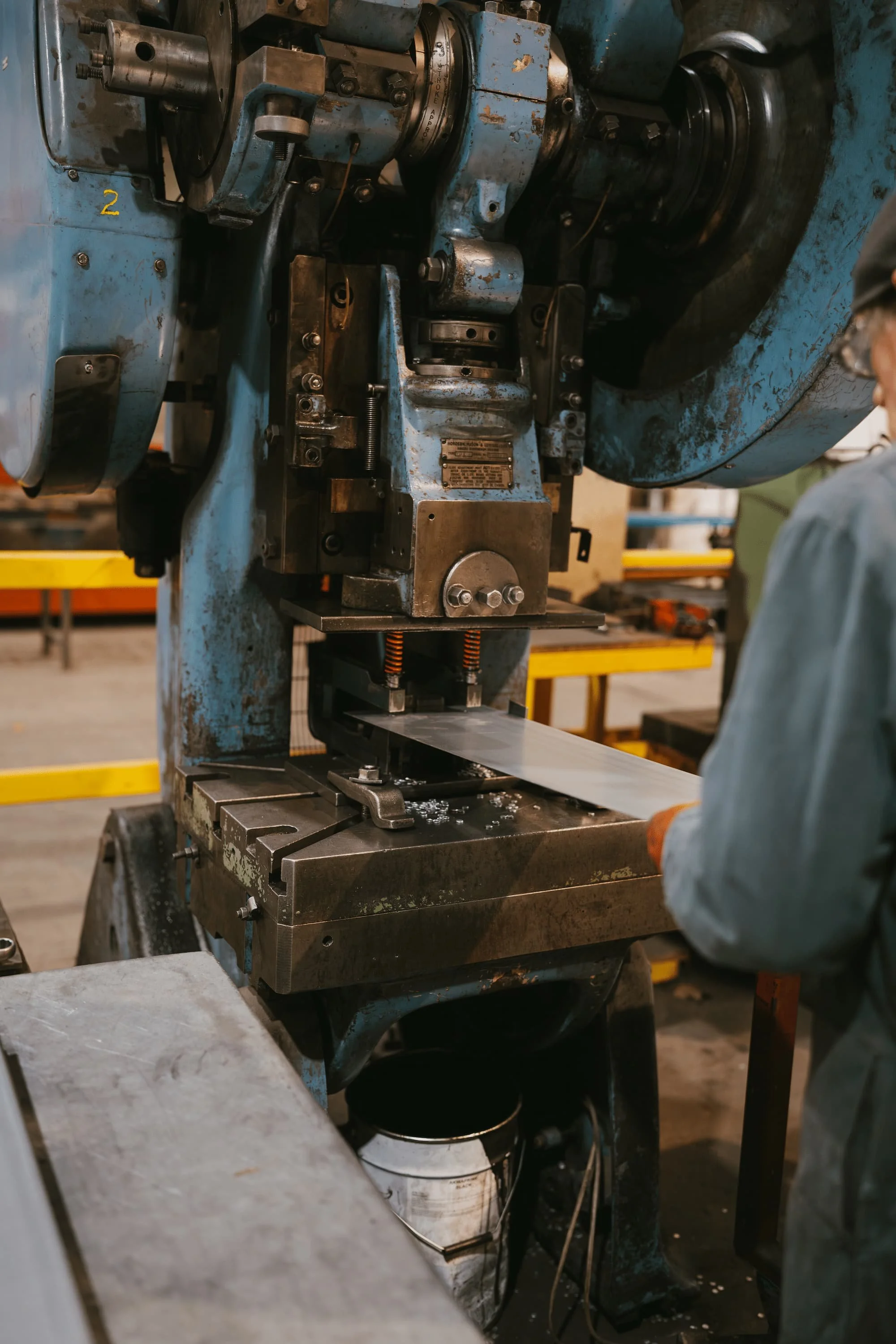
Fledgling Aidan’s first foray into the world of work came in a steel fabrication factory. My task was to punch a hole in a square metal plate and then repeat approximately one thousand times.
On reflection I find it remarkable that this early teen being paid £3/h was able to stick at it.
But the environment and tooling were set up in a highly motivating way.
I knew that my small part contributed to large components to be used in the construction of seating for a new motorsport stadium. I had to get my part done right and in time for the next part of the process.
Here’s how they set me up to stay on task:
All the plates were neatly stacked in reach to my right.
The machine tooling just required me to slot the plate against the rest, move out of the way of the guard and press the pedal.
The Test template was placed on the machine. Discard any that were off.
Stack the finished piece in a new bin on the left.
There was a counter at eye level counting each press
All this took place in the open. I didn’t want anyone to see the bin of discards piling up or leave anyone waiting for what they needed. What I had to do was very small and progress or lack of was evident to everyone in the team. If there was a hold-up in the process everyone knew and actions could be taken to re-distribute personnel to clear the block.
When building Digital Products a lot of the work takes place in brains and on screens. Building a feature can take days or weeks before being ready for sharing for testing. The work isn’t as visible as factory work.
Here are some things we can do to make the work visible which is highly motivating for the team involved and immensely reassuring for wider stakeholders.
Size the work small
This actually takes work. It can be tempting to look at a user journey in a design prototype and estimate that it’ll be completed in two weeks and crack on. However I find that breaking that down into tasks that can be completed one or two a day is always worthwhile. That way each team member regularly gets their own feedback that their work is progressing and everyone else can see it too. Progress breeds confidence.
Streamline the process
Just like in a factory stations are physically as close to each other as possible, find ways to eliminate distance between the stages. If you’re able to sit physically close together and can talk throughout the day then that’s something special to take advantage of. More often than not it takes a retrospective or two to fine tune notifications to ensure time is not lost between PR reviews, deployments, automated tests and manual tests, bugs being raised and addressed etc
Communicate the vision
When I was producing a thousand 8cm square plates with a hole in knowing they were going to be part of enabling thousands of fans to experience a live sport event helped a lot! Building quality software is work that can take you deep into the detail at times. Keep talking about the end users, the problems that will be solved, the opportunities that these features will unlock. These stories are good for motivation but also brilliant for aligning efforts to create the best possible experience for the customers.
Most surprises that de-rail deadlines can be mitigated in good time by making the work small and visible. I’ve been refining these practices since 2013 working for clients such as Google, UK Gov, UK Power Networks and Arsenal FC.
If you're sponsoring a digital product and want confidence that your investment is being managed with discipline and transparency, let's discuss your project. Contact me below.